
Turnstone (Arenaria interpres)
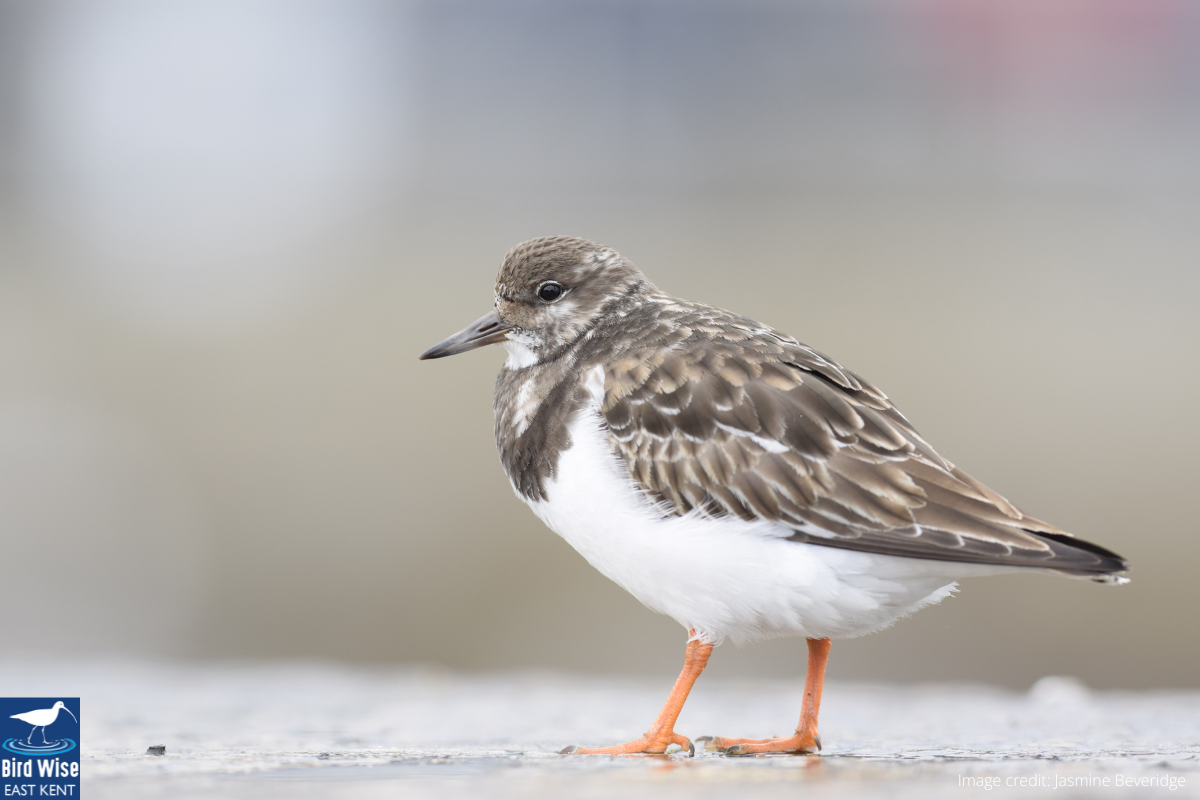
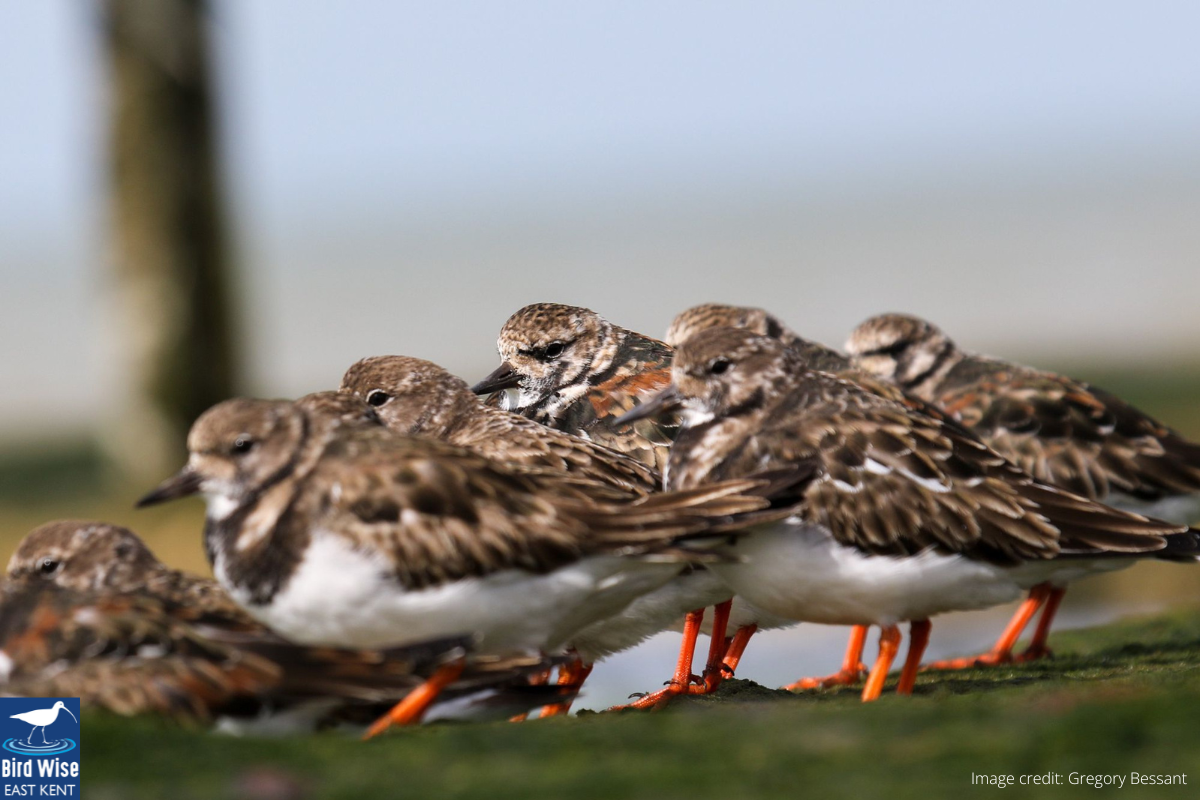
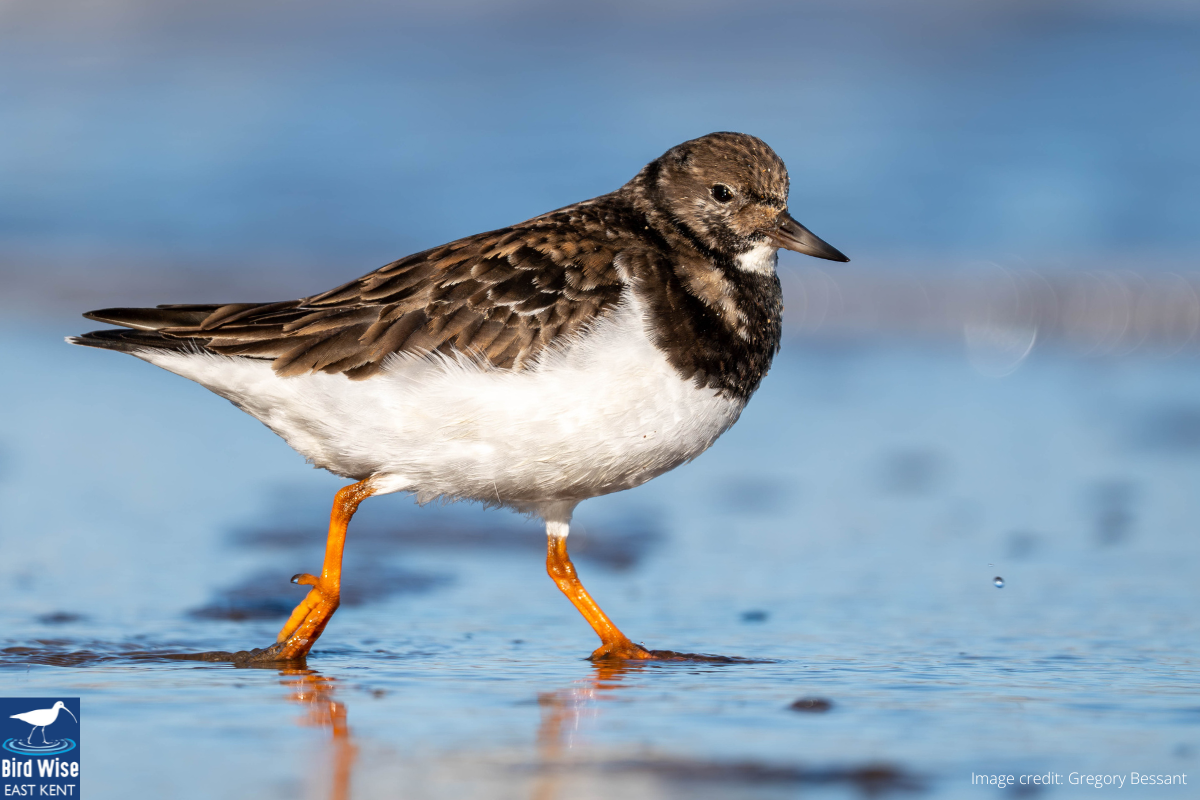
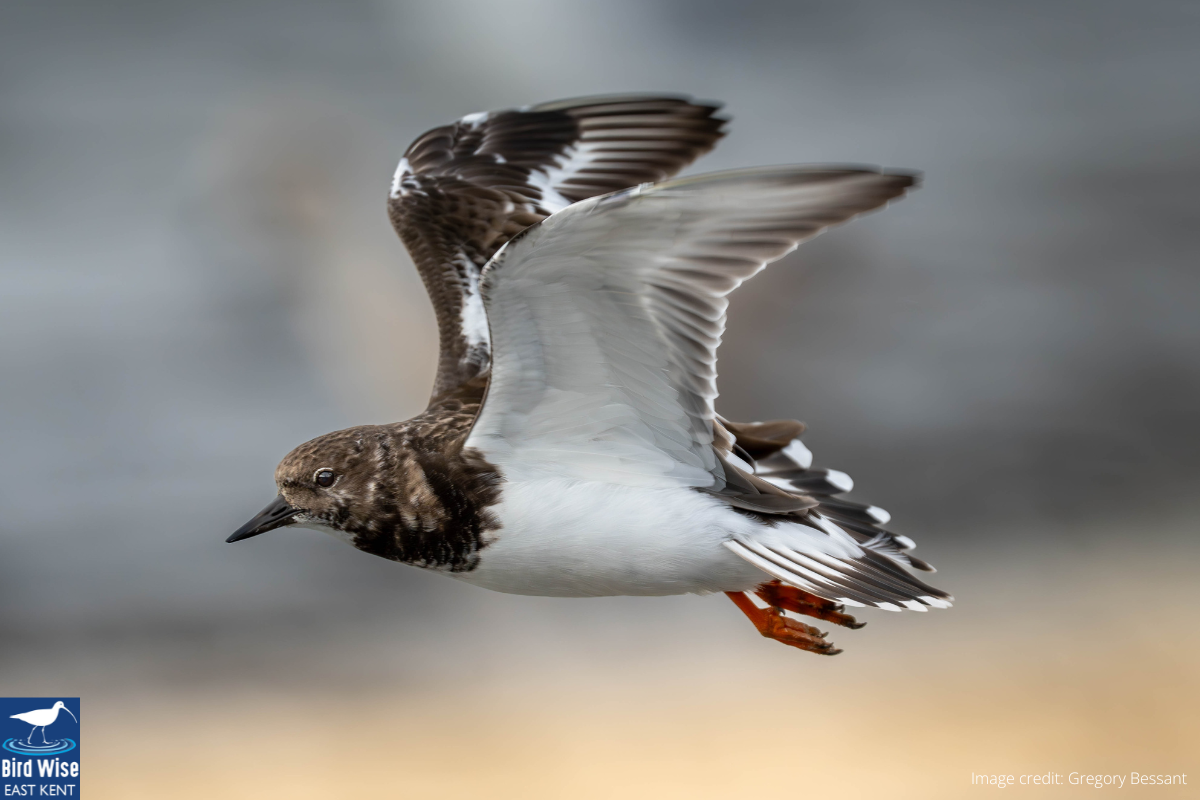
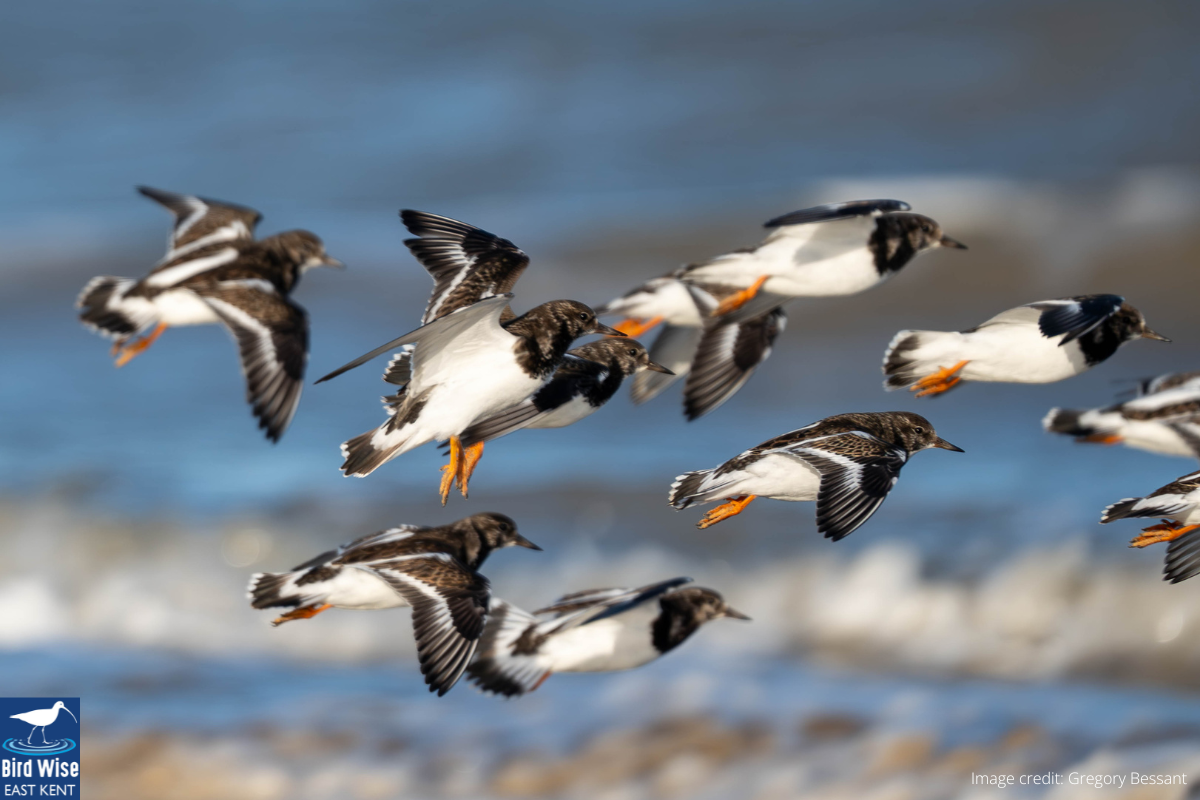
The turnstone or ruddy turnstone, so named for its mottled complexion of reddish feathers, is a small bird weighing little more than 150 grams, which is as much as two delicious blueberry muffins, and 23cm in length. Despite its diminutive stature the turnstone is a plucky bird, often seen; routing for crustaceans, turning stones, which can be equal in weight to the bird itself, to gather molluscs, digging for sandhoppers, probing like a miniature jackhammer for gastropods, or pecking around in some seaweed. With its eyes on the prize looking down to feed, it may not notice a dog, or person walking by until the last minute, becoming frightened and taking flight. The turnstone will take flight at around 25 metres. When taking flight the turnstone may move a few metres down the beach or leave the area altogether. Frequent disturbances will result in significant loss of feeding time.
Feeding in groups called contradictions they live off molluscs, crustaceans, gastropods, and sandhoppers sounds like a delicious nutritional meal, the turnstone needs to eat for 95% of the daytime. Even 1% reduction in allowing the bird to feed can massively reduce it’s chances of surviving the long return migration back to its summer breeding in Baffin Island, Canada (2,800 miles), Greenland (1,950 miles), and Iceland (1,200 miles). They will spend up to 70 hours in the air flying, which uses up lots of energy, around 190,000 calories. That’s a lot of molluscs to eat!
Welcome the turnstone to East Kent’s coast every winter by saying ᑐᙵᓱ (Tunngahugit/Tunngasugit) hello in inuit language, Inuktitut, as its summer home freezes over. When they arrive they will show dominance behaviour, hunching down, lowering their tail, and chasing off others. You may see this behaviour throughout the winter as they battle for the best foraging places.
You may hear the turnstone’s frequent staccato chuckle when feeding or flying, “tuk-tuk-tuk”. If you hear a sharp metallic note that is its alarm call and something has become too close.
Turnstones are faithful birds and return to the same part of the coast each year. Which is good as they tend to live for 9 years on average, with the oldest known turnstone to be over 19 years old.
In late march say ᓈᒻᒪᒃᑦᓯᐊᕆᑦ (Naammaktsiarit) for have a good journey as they fly back for the summer.
There is a wintering population of 48,000 turnstone in the UK. With a decreasing global population of between 300,000 and 500,000.
The turnstone is protected under the Wildlife and Countryside Act 1981 and is on the Amber List of conserved birds.
Download our handy Turnstone identification guide and fact sheet below.
Listen to the turnstone bird call
Listen to the turnstone alarm call
Discover more about the daring dozen migratory birds found in East Kent
Birds that have made the perilous journey to feed on our coast

Join the Savvy Sea Dogs
By following our Coastal Canine Code
you can ensure that our four legged friends
can continue to enjoy the coast whilst avoiding disturbance to our feathered friends.