
Curlew (Numenius arquata)
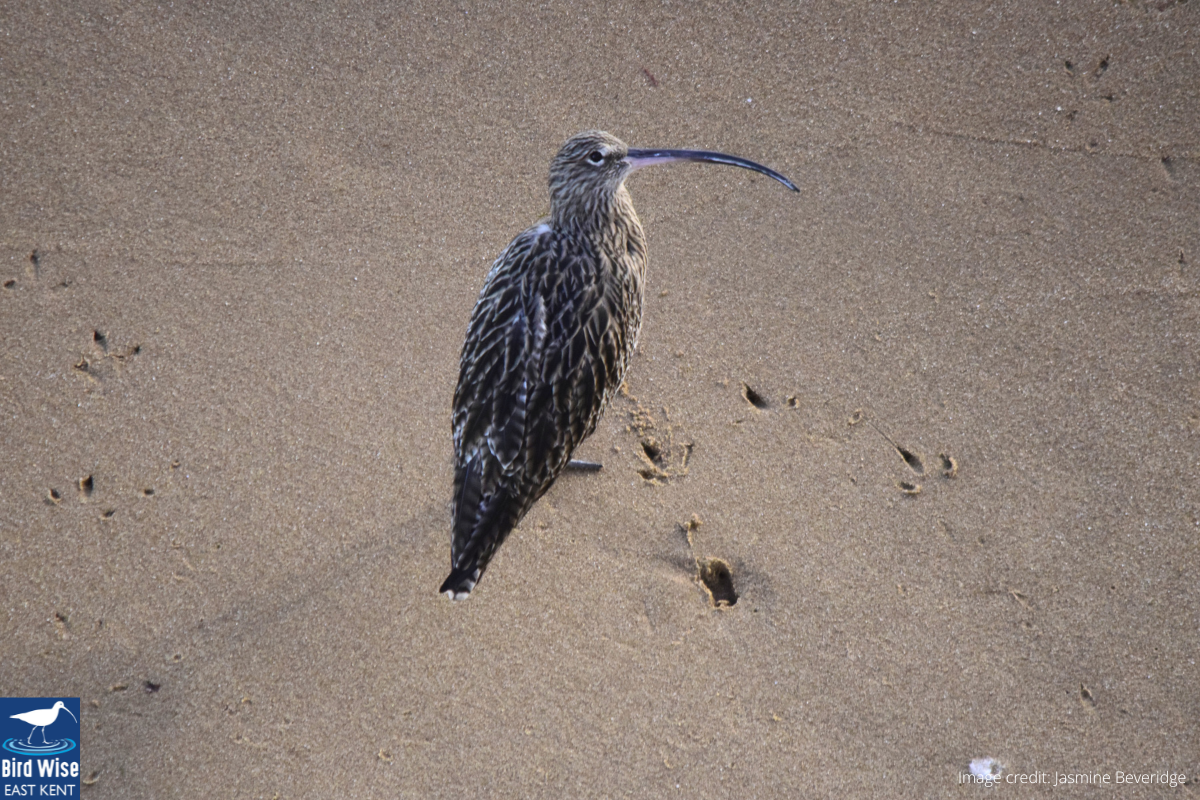
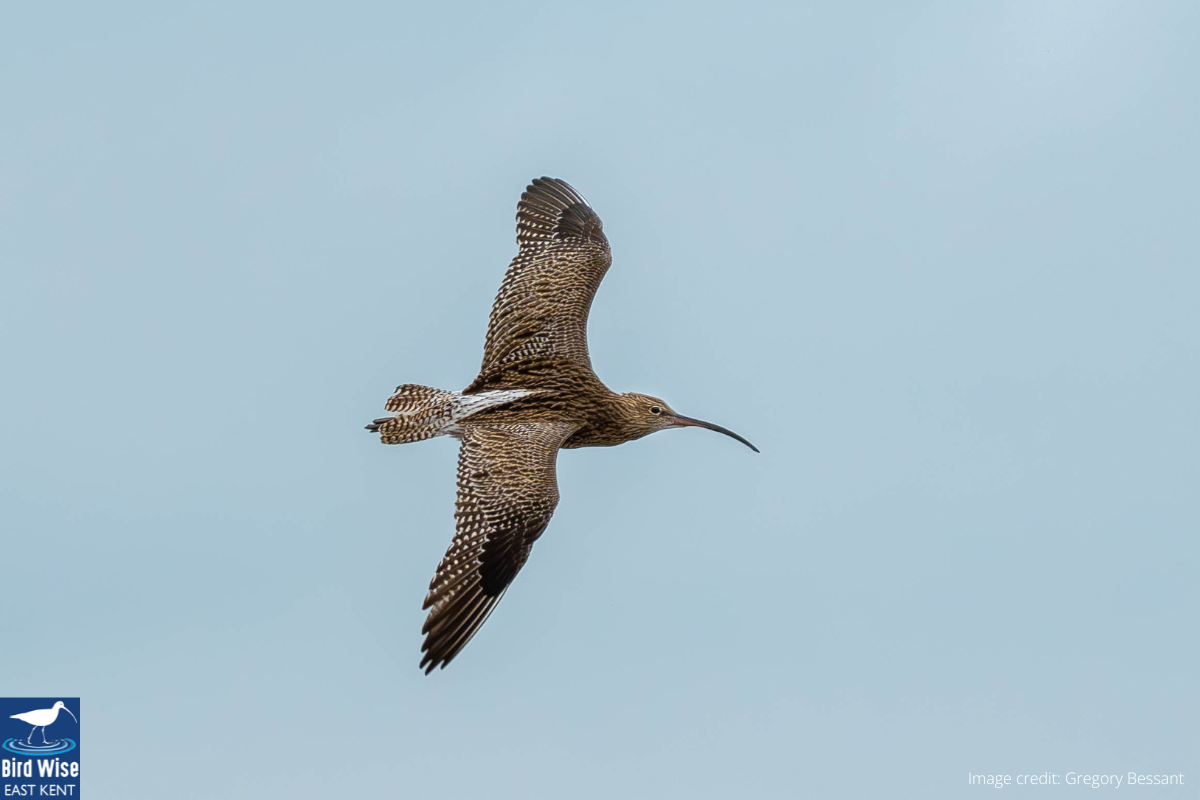
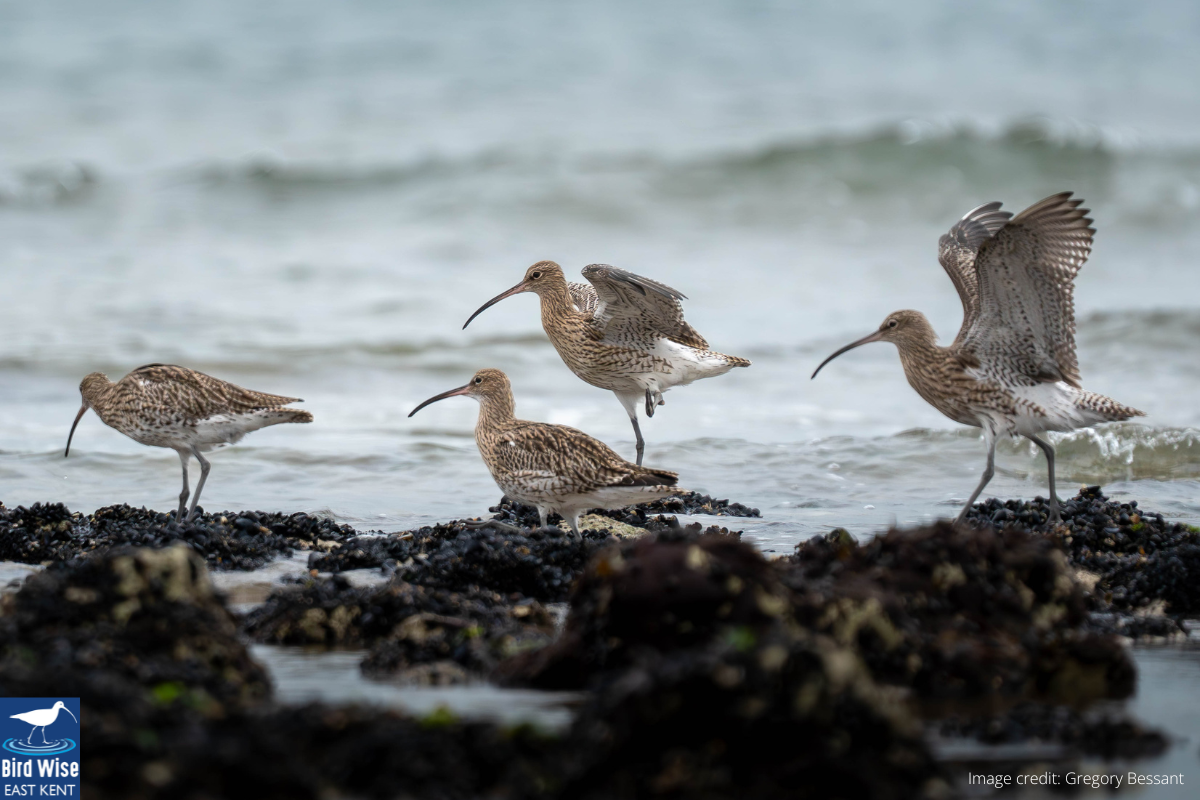

This distinctive bird with its long curved bill can be seen digging for invertebrate prey in the mud. Probing its beak into the murky depths for worms, shellfish, and shrimp. Despite its impressive proboscis, and it's blue legs, the curlew is otherwise a little drab. Mottled yellows, blacks, and greys make up its plumage, and it has been described as a bit frumpy looking. Which I think is a tad rude.
The curlew is the one of the largest birds found on our shores and can be up to 1 kilogram in weight, which is as much as 12,821 bees, and is the largest european wader. Gathered in groups, or a curfew of curlews, it’s distinguished call can be heard across the mudflats, “cur-li, cur-li”. Giving the bird it’s common name. It’s scientific name, Numenius arquata, refers to its crescent shaped bill, Numenius or neos (new) mene (moon). Also, arquata, means bow-shaped.
These birds have flown all the way from Russia, Norway, Sweden, and Finland up to 3,000 miles away. So they are tired and need to feed. Do not disturb, and give them a wide berth as they can take flight and waste energy easily, being disturbed from a distance of 800 metres. There are around 140,000 winter visitors in the UK.
Curlew are protected under the Wildlife and Countryside Act 1981 and are a red listed species.
Listen to the curlew bird call
Listen to the curlew alarm call
Discover more about the daring dozen migratory birds found in East Kent
Birds that have made the perilous journey to feed on our coast.
Join the Savvy Sea Dogs
By following our Coastal Canine Code
you can ensure that our four legged friends
can continue to enjoy the coast whilst avoiding disturbance to our feathered friends.