The sanderling
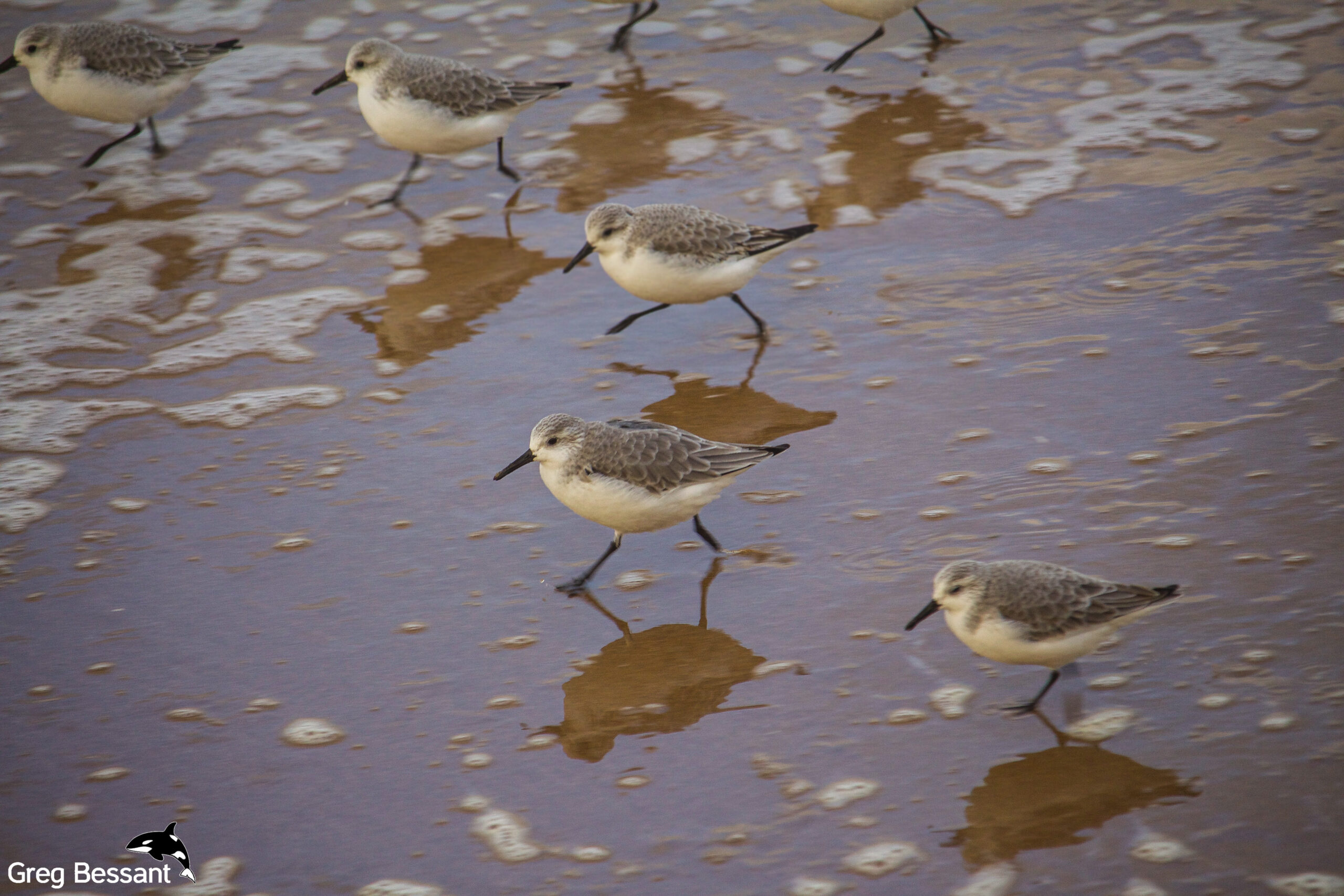
The sanderling is one of our smallest winter waders (along with the little dunlin) and is definitely one of the people’s favourites along the coast here. These birds can often be found running in groups between the waves at high tide and are very entertaining to watch. They have a distinctive running action – a little bit like a clockwork toy – which is down to them only having three toes on each foot. They are missing the hind toe! When low tide arrives, they’ll move all the way down to the low tide mark, gobbling up small marine worms, crustaceans and molluscs.
Around 56,000 sanderlings fly over to the UK shores from across their Arctic breeding grounds – Finland, Denmark, Sweden, Norway and Iceland. That’s some pretty long distances for such a small bird! Incredibly, some sanderlings will travel even further, as far as Namibia, in Southern Africa. They are one of the most widespread shorebirds and in winter they can spotted on many sandy beaches around the world. The circumstances that lead to their initial migration spot is unknown, but wherever they end up in that first year will be where they return year after year.
Although they’re one of our most common shorebirds, their populations are declining. These birds are now classified in the UK as Amber under the Birds of Conservation Concern, due to a decline in recent breeding populations and winter populations. While spending time on the coast here, disturbance is a key issue for these birds. Every time they are frightened they will fly away, wasting energy needed to survive the winter months and flight back home. We can help to protect them by giving them space when they are here.
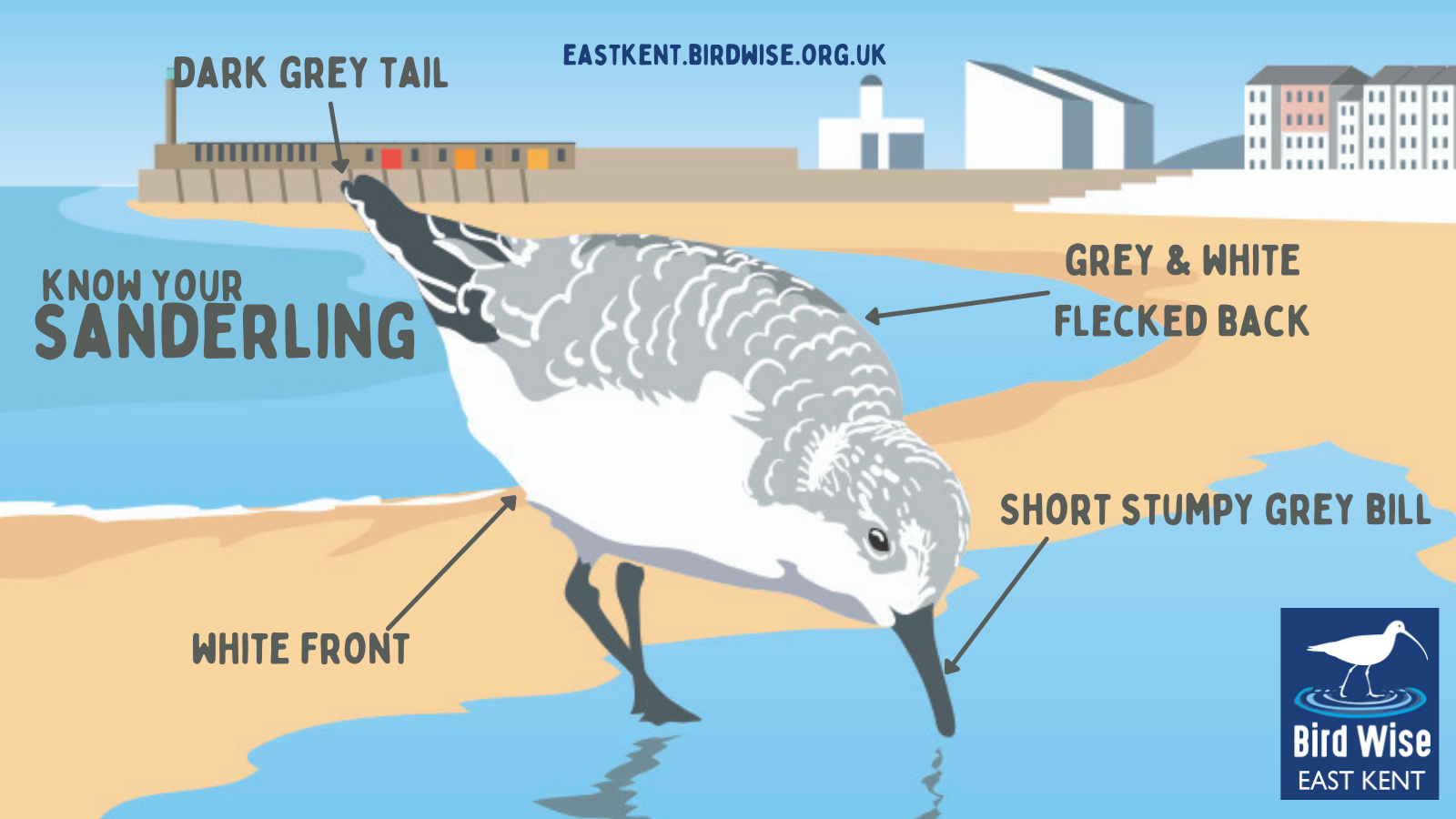
If you’d like to identify a sanderling, look out for groups of small light birds at the tide line. They’re one of the whitest waders in the winter, with a white underbelly and pale grey upper wings, neck and head. Their beaks, feet and tail feathers are all black. If you can see their bill, it is rather stumpy, as are their legs. Despite this, they run very fast along the sand and are one of the most active waders!!